Canada felt like a soccer nation in the 1970s when I was a kid in Windsor, Ontario. My older brother (Gordie Johnson, who would become leader of rock band Big Sugar) and I played soccer before any other sport. Our striker was Kevin Hackett, an immigrant from England, the cradle of football. Our tournaments felt like World Cups involving kids whose parents came from soccer powers such as Italy, Portugal and Yugoslavia. Even back then, more kids played soccer than any other sport. It was natural to assume that Canada belonged on the world stage.
But for decades, we didn’t. Our best players chose to play for England or other nations. Our best athletes could earn more income and stardom playing hockey, baseball, football and basketball. At the 1976 Montreal Olympics, Canada bowed out with losses to Soviet Union and North Korea.
But fans like me didn’t give up our love for soccer. As a journalism student at Carleton University, my first job was covering our team, the Ravens, who reached the Canadian university final with players such as Mike Llanos, Don Mezei and Sean Holmes, losing only to University of British Columbia on a rainy day in Ottawa that suited the players from Vancouver.
On the national level, we qualified for the 1986 World Cup in Mexico, dominated by Diego Maradona and Argentina. Though we scored no goals in losses to France, Hungary and the Soviet Union, we believed we could someday challenge Germany, England, Italy and other nations who supplied waves of immigrants to Canada.
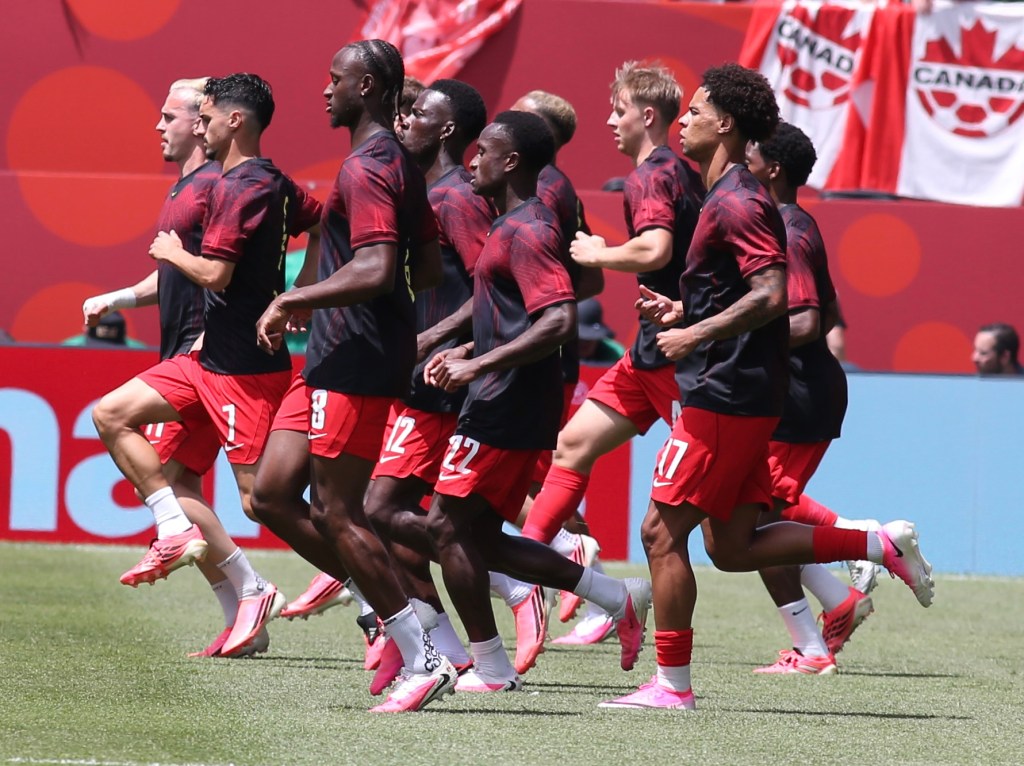
But as the Toronto Blue Jays won the World Series in 1993, and Canada grew into a basketball powerhouse culminating in the Toronto Raptors NBA title of 2019, Canadian men’s soccer continued to lag behind. We lost 8-1 to Honduras in 2012 and fell to 122nd in the FIFA world rankings amid a 16-match winless streak until September 2014.
Canadians opted to play for other countries. Owen Hargreaves, born and raised in Calgary, played midfield for England at the 2002 and 2006 World Cups. Jonathan de Guzman, born and raised in the Toronto suburb or Scarborough, won bronze with Holland at the 2014 World Cup, even while his brother Julian starred for Canada. Asmir Begovic, raised in Edmonton, played for Bosnia and Herzegovina. Ryan Elloumi, from St. Albert outside Edmonton, played for Tunisia. Yassine “Bono” Bounou, born in Montreal, starred as keeper for Morocco’s drive to the World Cup semis in 2022.
Given the size of diaspora communities in Canadian cities, Canadian players often felt like the visiting team at games in Canada.
But these waves of immigrants, and their offspring, added to the ranks of more than one million registered soccer players in Canada. More than half of Canadian youth played soccer. These younger kids wanted to play for Canada, not other nations.


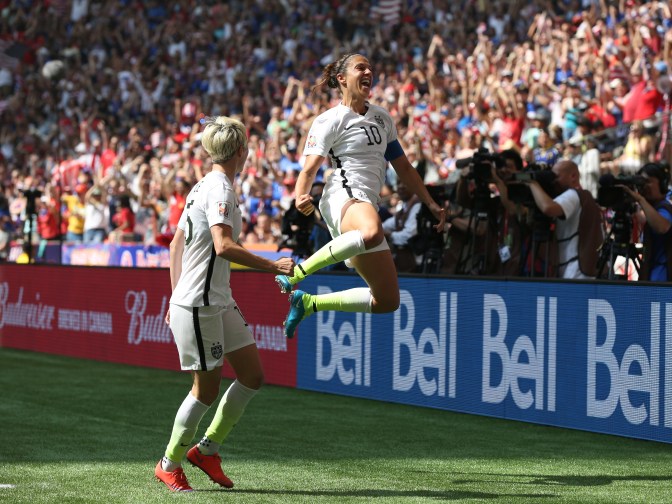
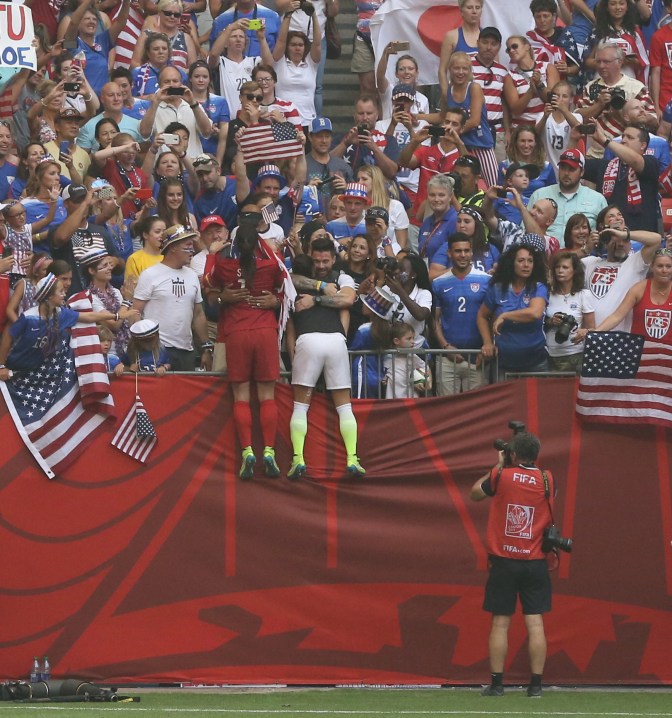
Canadian sports fans, who often complained about low scoring and fake injuries in soccer, began to support soccer in 2015. Canada hosted the Women’s World Cup in 2015, packing BC Place for the USA-Japan final.
In March 2016, a record crowd of 55,000 cheered for Canada’s men despite losing 3-0 to Mexico at BC Place Stadium in Vancouver.
In 2021, our women led by Christine Sinclair won the Olympic title.
Under coach John Herdsman, Canada qualified for the 2022 World Cup in Qatar after beating Mexico 3-1 in snow and minus 9 Celsius temperatures in Edmonton. Fans called Edmonton’s Commonwealth stadium “The Ice-Teca” in reference to Mexico’s legendary Estadio Azteca.
In the desert heat of Qatar, we didn’t win, but we felt like we belonged. Alphonso Davies, a dynamic left back who lived in a refugee camp before moving to Edmonton and winning titles with Bayern Munich, scored our first ever World Cup goal. Morocco and Croatia both reached the semis after beating us. Canada dominated possession but couldn’t convert 22 shots against Belgium, who had finished third at the 2018 World Cup in Russia.
In May 2024, amid turmoil, Canada hired Jesse Marsch as head coach. MLS clubs and private donors paid his salary.
The Copa America in 2024 was a watershed moment. In the group stage, we lost only 2-0 to Argentina, then world number one. We beat Peru 1-0 on a goal from Jonathan David. We drew with Chile and beat Venezuela on penalties. In the semi-final, Canada again only lost by 2-0 to Argentina. In the third place game, we had a 2-1 lead late against Uruguay before losing on penalty kicks. We didn’t dwell on the losses, or what could have been. We believed that we could hang with the top teams in South America.
As co-host of the 2026 World Cup, we felt good about our chances playing Bosnia in Toronto and Qatar and Switzerland in Vancouver. But we had more wounded warriors than any other team. We fell behind to Bosnia in Toronto. But in the second half, Canadian fans grew tired of listening to Bosnia fans, many of whom enjoy life in Canada. A chant of “Canada, Canada, Canada” whipped round BMO Field by Lake Ontario. Cyle Larin came off the bench to score the tying goal, and the buzz began to build around the country.
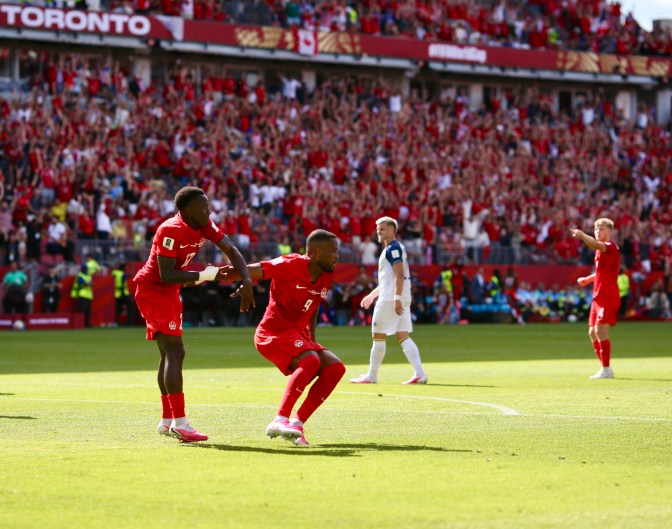

Canada trounced Qatar 6-0 to lead Group B but lost midfielder Ismael Kone to a broken leg. Canada then blew a chance to host more games in Vancouver by losing to Switzerland 2-1 due to lapses early in the second half.

Instead of hosting Algeria in Vancouver, Canadian fans had to deal with airline price gouging or long drives to Los Angeles. Canada dominated South Africa early, but Derek Cornelius couldn’t head into the open net, and Canada missed other chances. With South Africa clearly hoping for extra time, Stephen Eustaquio stepped forward into his place in history.
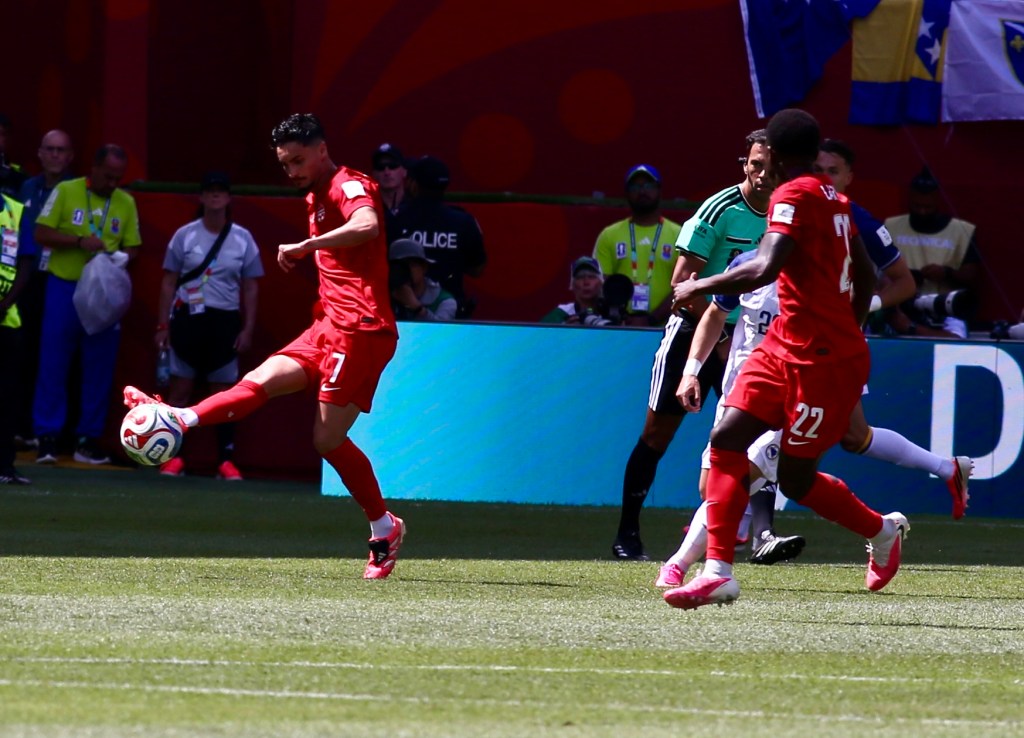
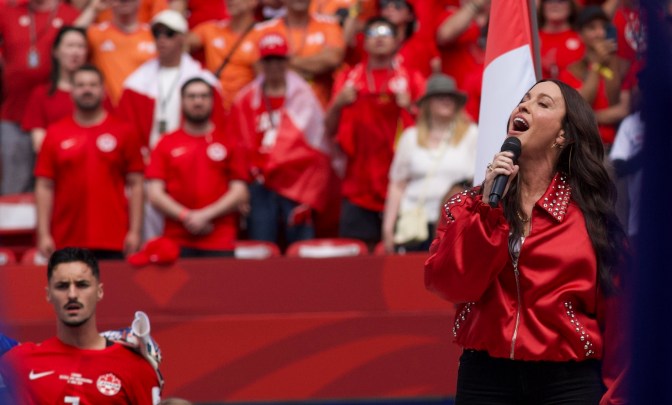
Eustaquio, born in Leamington, Ontario, moved to Portugal at age 7 and signed with teams there. He played for Canada’s Under-17 team and then Portugal’s Under-21 team. In February 2019, he committed to play for Canada, and played two games in the 2022 World Cup. He lost his mother to brain cancer in 2023, and then his father to a heart attack in April 2024. He became captain of Team Canada after Alphonso Davies’ injury. Before Canada’s opening game hosting the World Cup, Alanis Morissette often looked toward him during her performance of Oh Canada.
The game against South Africa showed a combination of his skills. He curled free kicks and corner kicks onto the heads of his center backs Cornelius and Bombito. He blocked shots and disrupted plays. In stoppage time, he read the play, intercepted a poor attempt at clearance, controlled the ball with his chest, volleyed it out of the air, kept it low, and angled it perfectly into the corner. It was the best play of his life, at the very best time.
After the game, a tearful Eustaquio said he played in honour of his late parents and other family members. He said the whole country was with him when he hit that winning shot. We were. We have been with him and Team Canada all this time.

Canadians will lionize Eustaquio’s goal alongside other glorious moments in our sports history: Paul Henderson’s goal in 1972 against the Soviet Union; Joe Carter’s home-run to win the 1993 World Series; Sidney Crosby’s goal to win the 2010 Olympics in Vancouver; Kawhi Leonard’s shot during the 2019 NBA title run; Bianca Andreescu beating Serena Williams in the 2019 US Open final; Shai Gilgeous Alexander winning NBA MVP twice and leading Canada over USA for bronze at the FIBA World Cup in Manila in 2023 and Oklahoma City to the NBA title in 2025.
Now, Canadians aren’t afraid of playing either Morocco or Netherlands in the World Cup round of 16 game in Houston on July 4. We belong here. We are an emerging soccer power. We are going to be like France, a multicultural society that drew on players such as Zidane, Thuram and Mbappe with roots in Africa and elsewhere. Canada is a magnet for talent from all over the world. We are going to become a top 10 soccer team in the world. We are truly a “soccer nation” now.
“You guys are Canadian heroes today,” coach Marsh told them in the post-game huddle on the field. “Canadian heroes for the future children of this country, who play this sport, who are going to have a great future because of you guys.” Indeed, the red wave is rising.
words and images copyright Christopher Johnson Globalite Media all rights reserved


You must be logged in to post a comment.